
Key takeaways
- Digital wayfinding and live schedules reduce visitor friction and improve flow across complex heritage estates.
- Personalised digital content and integrated accessibility features help cater to the diverse needs of your audience.
- Visitor intelligence gathered from a guest experience platform provides data to inform operational improvements and boost secondary spend.
Beyond the Guidebook and Static Sign
Heritage attractions face a unique set of challenges. Your assets are precious and often protected. The grounds can be sprawling and confusing. The stories you tell are complex and layered. For decades, the response has been the printed map, the A-board sign, and the guidebook. These are familiar tools. They are also static. They cannot respond to a temporary path closure, a change in a demonstration time, or the specific interests of the person holding them.
Today's visitors, used to information at their fingertips, have different expectations. They want to find the toilets easily, check if the cafe is busy, and discover stories that resonate with them. On a sensitive historic site, fulfilling these expectations requires a modern approach that complements the physical environment. Technology can be used to remove friction and deepen appreciation for the history you preserve.
The Challenge of Complex Estates
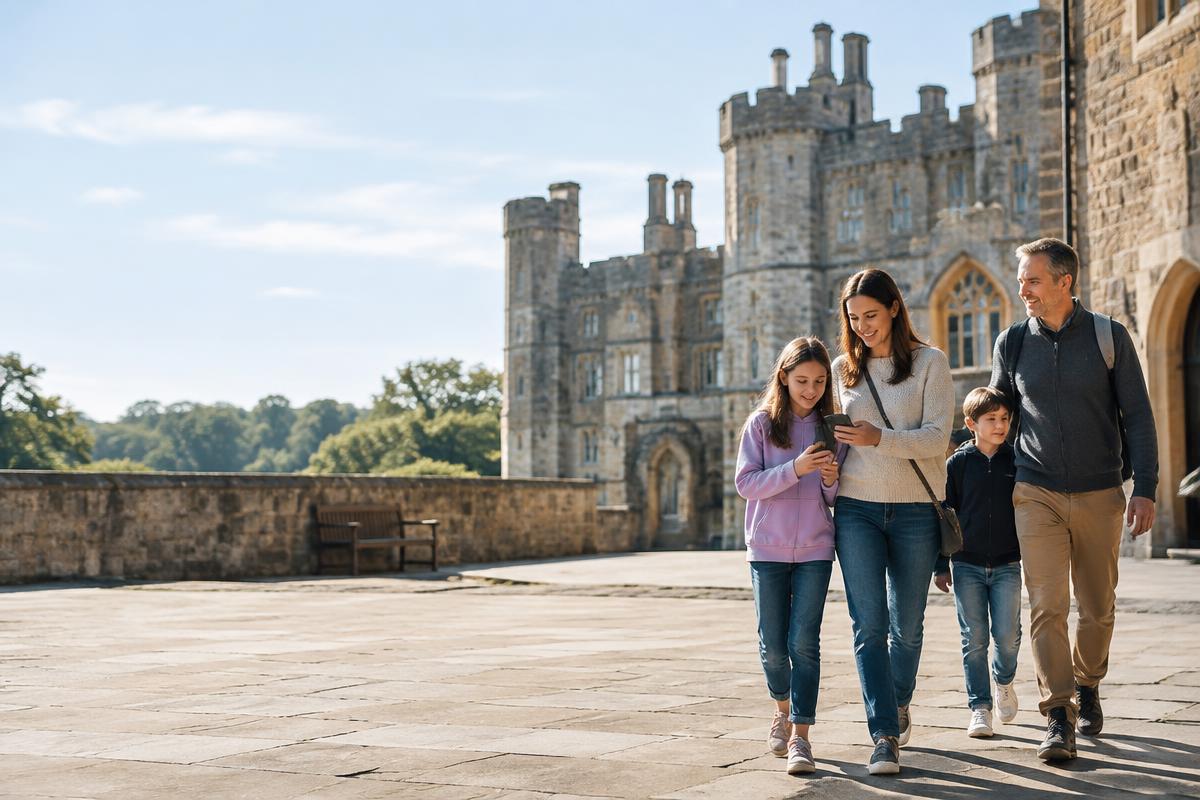
Many heritage properties are not single buildings but extensive estates with gardens, parkland, outbuildings, and winding paths. For a first-time guest, this can be daunting. They arrive, look at a large map board, and try to create a mental model of the entire site. It is a common sight: a family stopped at a path junction, turning a paper map around, debating which way to go. Weathered or poorly placed signs only add to the confusion. This initial uncertainty can create stress and detract from the magic of arrival.
Digital Maps for Historic Places
A digital map on a visitor's own phone fundamentally changes this. Using GPS, it shows their exact location, making orientation immediate. Key facilities, points of interest, and event locations can be clearly marked. Picture a guest wanting to find the quickest route to the restored Victorian glasshouse. A digital map can provide step-by-step directions, just like the mapping apps they use every day. This simple tool reduces anxiety and lets visitors explore with confidence, spending less time feeling lost and more time being present. It also allows for the clear demarcation of accessible or step-free routes, making the site more welcoming for everyone.
Keeping Visitors Informed in Real Time
A heritage attraction is a living place. It has a pulse of daily events, from conservation talks and guided tours to animal feeding times in a farm park. The traditional method of communication is a printed 'What's On' sheet or a chalkboard at the entrance. The printed leaflet is a snapshot in time. It is obsolete the moment a change occurs. If a talk is moved to a different room, or a popular demonstration is cancelled, the printed sheet creates disappointed visitors who turn up at the wrong place or for an event that is not happening.
From Printed Leaflet to Live Itinerary
A digital guest experience platform provides a live, dynamic schedule. It is always current. You can update event times, locations, or descriptions instantly from a central dashboard, and the changes appear on every visitor's phone immediately. For example, a heavy downpour floods a path leading to the outdoor theatre. You can reroute visitors to an alternative indoor performance and send a push notification to let them know. This proactive communication manages expectations and demonstrates a high level of care.
- Instantly update talk times or locations.
- Announce pop-up demonstrations or character appearances.
- Alert visitors to short-term closures of specific rooms or paths.
- Notify guests when a busy area, like the main cafe, becomes quieter.
Telling Stories in New Ways
Interpretation is the heart of the heritage experience. In a delicately preserved room, a large text panel can feel intrusive. In a Grade I listed interior, you cannot simply drill holes in the wall to add more signage. We often face a conflict between providing rich information and preserving the authentic atmosphere of a space. How do you tell the deep, layered stories of your site without overwhelming the visitor or the room itself?
Context on Demand
A digital guide allows you to offer layers of content that visitors can access on demand. This approach avoids physical clutter and allows for personalisation. A visitor can use the app to scan a discreet marker near a portrait and pull up information about the artist, the sitter, and the social context. One person might listen to an audio clip about the painting's composition, while another reads about the scandalous life of the person depicted. This allows guests to follow their own interests, creating a more personal and memorable visit.
Understanding Your Visitor Through Data
A visitor app provides significant operational insight. Every anonymous interaction helps build a picture of how your site is used, providing visitor intelligence to improve your operations. This lets you move from guesswork to data-informed decision-making. For example, are people dwelling in the new exhibition or walking straight through? Which garden path is the most popular route to the cafe? Where do visitors stop and appear lost?
Answering these questions allows you to optimise your site. The data might show a bottleneck forming at a particular gateway every day at 11am, allowing you to re-station staff to help manage flow. It might reveal that a 'minor' point of interest is surprisingly popular, suggesting it deserves more interpretation. Platforms like n-gage.io provide this visitor intelligence through intuitive dashboards, helping you improve the guest experience and allocate resources more effectively.
Boosting On-Site Spend
This same channel can be used to support your commercial operations. A timely push notification can remind visitors about the afternoon cream tea offer as they pass the tea room. You can promote specific items in the gift shop related to the exhibit they have just seen. It is also an effective way to encourage repeat visits by promoting events and converting day visitors into members through compelling digital memberships.
Practical First Steps for Heritage Operators
Adopting a digital approach does not need to be a monumental undertaking. It is a journey of small, iterative steps focused on solving real problems for your visitors and your team. A phased approach is often the most successful. Here is a simple framework to get you started.
- Audit Your Current Visitor Journey: Walk your site with the eyes of a first-time guest. Note every point of confusion, every question you have, and every moment of frustration. What are the most common questions your staff and volunteers have to answer?
- Define Your Core Objective: What is the single biggest problem you want to solve? Is it wayfinding across your large estate? Is it communicating a complex schedule of live events? Perhaps it is providing deeper stories in a sensitive historic interior. Focus on solving one or two key issues first.
- Assess Your On-Site Connectivity: Review your current Wi-Fi and mobile signal coverage. While modern apps are designed to work well even with patchy connectivity, understanding your baseline is a useful starting point for any digital project.
- Start Small and Build Momentum: You do not need to launch every feature at once. Begin with a digital map and a live schedule. Gather feedback from visitors and staff. Use the initial visitor intelligence from a platform like n-gage.io to prove the value, then add more functionality like tours, trails, or in-app commerce over time.
Want this applied to your attraction?
We are happy to talk through your own plans, even at an early stage.
More for heritage attractions
Heritage attraction visitor data for smarter operations
Heritage visitor data offers more than simple footfall counts. Use it to optimise flow, staffing, and secondary spend for a better guest experience.
Read articleHeritage attraction income: memberships, donations and spend
Discover practical strategies for UK heritage attractions to boost commercial growth. This guide covers secondary spend, memberships, donations, and repeat visits.
Read article