
Key takeaways
- The substantive duties under Martyn’s Law are not yet in force. Current official guidance expects commencement in spring 2027, with the exact date still to be confirmed.
- Scope depends on the premises, their use and the number of people reasonably expected at the same time, including staff.
- Attractions already have emergency planning responsibilities. Zoo, wildlife and safari park teams can build on experience of animal escape procedures, staff briefings and drills.
- Existing arrangements provide a foundation, but need to be assessed against the terrorism-specific requirements.
- Digital guest communication can support an attraction’s arrangements, but an app cannot reach everyone or establish compliance by itself.
Build on the planning your team already does
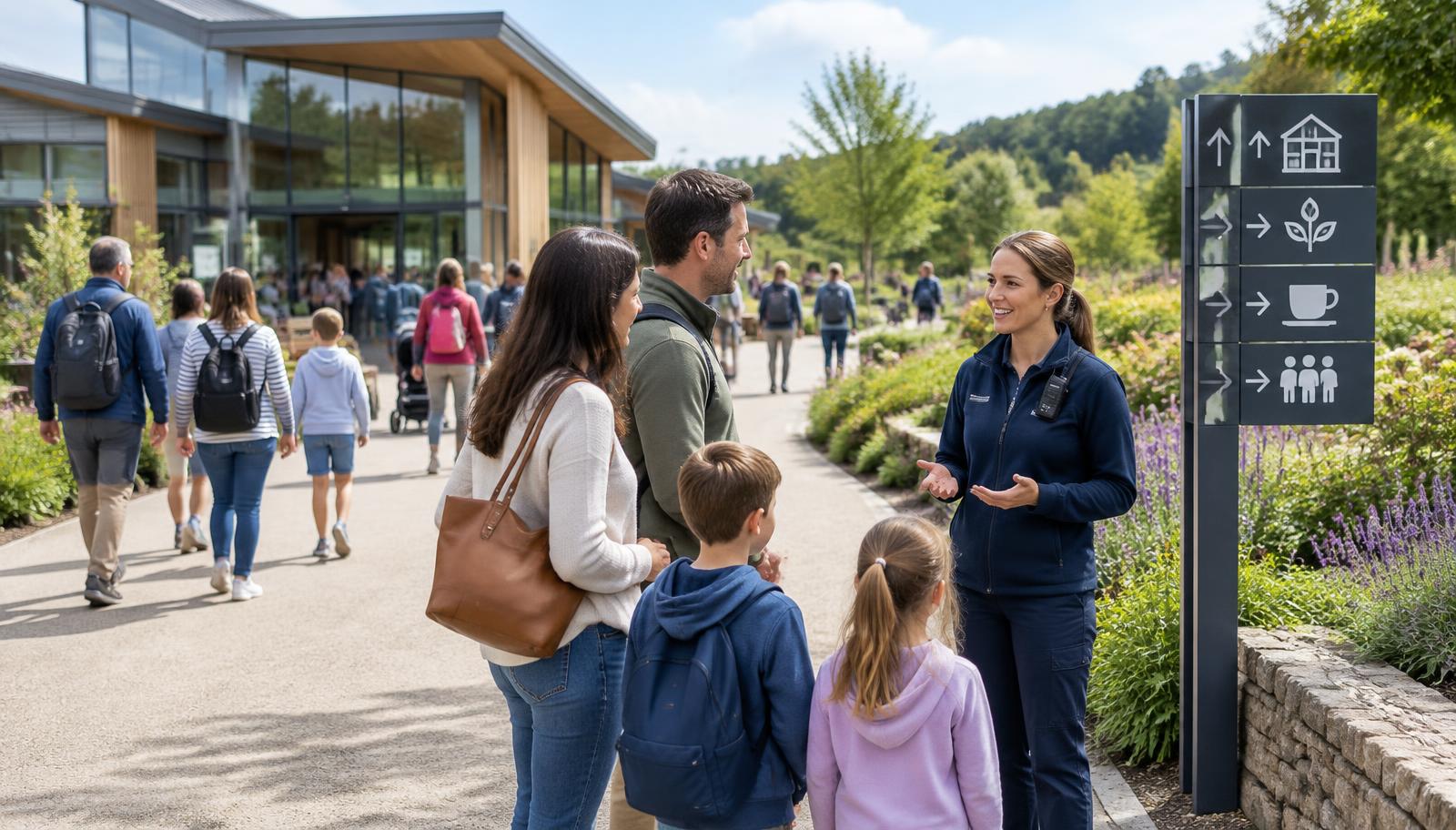
It is a busy afternoon at your attraction. Families are spread between indoor exhibits, outdoor trails, cafés and play areas. A school group is gathering for its next activity. Some visitors are looking at the app; others have put their phones away.
Your team already has procedures for responding when something goes wrong. At a zoo, wildlife park or safari park, these are likely to include animal escape arrangements alongside fire and other emergency plans. At a museum, heritage attraction or holiday park, established procedures will reflect the risks and activities of that site.
Martyn’s Law adds a specific focus on preparedness for terrorism. The useful starting point is to understand how your existing arrangements meet that purpose, and where they need to be adapted or strengthened.
That review should recognise the knowledge and experience already held by your operations, animal management and visitor-facing teams.
What is Martyn’s Law?
Martyn’s Law is the commonly used name for the Terrorism (Protection of Premises) Act 2025. It is named in memory of Martyn Hett, one of the 22 people killed in the Manchester Arena attack in 2017.
The legislation aims to improve preparedness and protective security at qualifying premises and events. It requires those responsible to take appropriate, reasonably practicable steps to reduce harm if a terrorist attack occurs. Larger qualifying premises and events will have additional duties to reduce their vulnerability to an attack.
It applies across England, Wales, Scotland and Northern Ireland.
The Act received Royal Assent on 3 April 2025. At the time of writing, its substantive duties have not commenced. The current official expectation is spring 2027; operators should check government updates for the confirmed date.
[Sources: Home Office statutory guidance; SIA overview]
Zoos, wildlife parks and safari parks already plan for emergencies
Animal escape preparedness is an established part of zoo operation. Zoos, wildlife parks and safari parks already work with emergency procedures, staff responsibilities and practical drills tailored to their animals and sites.
The revised Standards of Modern Zoo Practice for Great Britain, published in May 2025 and taking effect from 24 May 2027, reinforce that foundation. Section 8 covers public safety and escapes. Standard 8.21 requires a documented escape contingency procedure, staff familiarity and training relevant to their roles, a clear chain of responsibility, and actions concerning the visiting public, including overnight accommodation where present. The procedure must be reviewed within seven days of each drill or escape, with required changes implemented and recorded.
Standard 8.22 requires at least four animal escape drills each year, with records and review, subject to its dedicated-aquarium exception. Where evening events or overnight accommodation are provided within the zoo boundary, one annual drill must take place in twilight or darkness.
Sources: Defra’s revised standards, Section 8 · Official implementation dates
We explore the wider implications for leadership, visitor management and communication in our guide to the revised Standards of Modern Zoo Practice. The revised standards and Martyn’s Law are separate frameworks: preparing for one does not, by itself, demonstrate compliance with the other. Reviewing them together can help teams coordinate work on staff preparedness and public communication.
This gives the sector relevant experience to draw on: coordinating staff, communicating instructions and managing visitors across a complex site.
It is also more nuanced than a whole-site evacuation. Depending on the animal, its location and the approved response, visitors may need to leave an affected area, move into a building or remain in a protected location.
These capabilities provide a foundation for reviewing evacuation, invacuation, lockdown and communication under Martyn’s Law. They do not mean that an animal escape plan automatically meets terrorism-specific requirements: the threat, decisions and appropriate places of safety may differ.
For other attractions, fire evacuation and wider emergency arrangements provide their own foundation. HSE guidance already addresses emergency roles, alarms, communication and practice; its event guidance covers incident control, public information and evacuation. The detail will vary with the operation and applicable legislation.
Sources: HSE emergency procedures · HSE event emergency planning · Government fire safety guidance
For every sector, begin with a review of existing plans against the new duties. Retain what works, identify what needs changing and make sure the resulting procedures remain clear to the people who will use them.
Does it apply to your attraction?
Many attraction operators will need to assess their position. Official guidance includes zoos, theme parks, aquariums, museums and heritage attractions among the examples of uses covered.
However, being described as an attraction does not settle the question. Qualifying premises must meet several conditions, including having a building, or a building and other land, being wholly or mainly used for a specified purpose, meeting the attendance threshold and not falling within an exclusion.
Predominantly outdoor sites should examine the guidance carefully. Outdoor grounds and public buildings can form part of the same premises. Equally, some open-access outdoor locations are excluded.
The starting point is to identify the relevant premises and how they are used, rather than making assumptions from the attraction’s name or size.
[Source: Home Office scope guidance]
Count people present together, rather than annual visits
The thresholds concern how many people can reasonably be expected to be present at the same time, from time to time. Staff count too.
Broadly, and subject to the other scope rules:
| Tier | Number reasonably expected at the same time |
|---|---|
| Standard | 200–799 people, including staff |
| Enhanced | 800 or more people, including staff |
An attraction welcoming 100,000 visits a year cannot determine its tier from that figure alone. It needs to consider simultaneous attendance.
For example, 750 visitors and 60 staff together would exceed the enhanced threshold if that attendance is reasonably expected and the other criteria are met. Looking only at visitor ticket sales would miss part of the picture.
Use appropriate attendance evidence and the official assessment guidance. App downloads, active devices and location observations cover only part of your audience and should not be treated as a complete site headcount.
[Source: Home Office overarching factsheet]
Seasonal events need attention too
Christmas programmes, evening trails, concerts and other events can change how a site is used and how many people are present.
Qualifying events have their own scope conditions. These include public accessibility, an expectation of at least 800 people present together including staff, and specified entry checks, such as checking tickets or passes. Events at premises already in the enhanced tier are covered through those premises’ duties.
A location outside the qualifying-premises rules can still host a qualifying event, including on land without buildings.
Review the event programme alongside ordinary operations. Where another organisation is involved, establish who controls the relevant activity and how responsibilities and communications will be coordinated.
[Source: Home Office scope: events]
What will operators need to demonstrate?
The legislation distinguishes between public protection procedures and additional protective measures. Existing arrangements may contribute to meeting these duties, provided they are appropriate for the terrorism scenarios being considered.
Procedures for qualifying premises and events
Those responsible will need to notify the Security Industry Authority and have appropriate public protection procedures, so far as reasonably practicable.
These cover four areas:
- Evacuation: moving people away from danger by leaving all or part of the premises or event.
- Invacuation: moving people to a place within the premises or event where there is less risk of harm.
- Lockdown: securing premises or an event to prevent entry or exit.
- Communication: providing information to people at the premises or event.
The appropriate response depends on the circumstances. Review established fire and animal escape procedures to identify transferable arrangements and the decisions that need to differ. Routes, places of safety and access controls must suit the incident; familiar arrangements should not be assumed to be appropriate in every scenario.
People expected to implement the procedures must understand their roles. The Act does not mandate a particular commercial training course or require standard tier premises to purchase specific equipment.
[Source: Home Office standard duty requirements]
Additional requirements for the enhanced tier
Enhanced tier premises and qualifying events will also need appropriate, reasonably practicable protective measures addressing monitoring, movement, physical security and information security.
They must document their procedures and measures, assess how these reduce harm and vulnerability, keep the document current and provide it to the regulator.
Where the responsible person is an organisation, it must designate a senior individual with the required management or control responsibilities.
The measures should reflect the particular site. A dispersed wildlife park, an indoor aquarium and a historic building have different operational circumstances to consider.
[Source: Home Office enhanced duty requirements]
Who is the SIA?
The Security Industry Authority, or SIA, is the regulator best known for overseeing the UK private security industry.
It will also regulate Martyn’s Law, providing guidance, assessing compliance and taking enforcement action where necessary.
The responsible person is generally the individual or organisation with control of the premises for the relevant use. That responsibility cannot be transferred to a software supplier or adviser.
For attraction groups, establish who is responsible at each relevant premises and how central teams will support local delivery.
[Source: SIA overview]
Review communication within your existing operational plan
Build on the communication chain already used for emergencies. A useful review follows an instruction from the decision-maker through to the people who need to act. At a wildlife attraction, involve animal management and visitor operations together so public instructions support the site’s incident response.
Consider who authorises a message, who publishes it and how the same instruction reaches reception, catering teams, volunteers and other visitor-facing staff.
Then consider the visitor’s position. Someone inside a noisy exhibit may miss an announcement. A family on a distant trail may be beyond its coverage. A visitor who does not use a smartphone will need another way to receive information.
Review the channels together: staff, radios, public address systems, signs and digital tools. Identify gaps and decide how they will be covered.
The important outcome is that people receive clear, consistent instructions through arrangements suited to your site.
Where can a guest app help?
A guest app gives an attraction an additional channel for sharing information with people who use it.
Push notifications can draw attention to an update. Published content can provide further detail, while maps and site information can help visitors understand their surroundings.
To assess its role in your procedures, ask:
- Who has access to publish urgent information, including outside normal office hours?
- What happens if the usual administrator is unavailable?
- Can visitors find the latest information easily?
- How will staff keep digital updates consistent with announcements and personal instructions?
- What remains available if connectivity is lost?
Confirm how your own configuration behaves before assigning it a role in an emergency plan. A standard marketing notification function may need additional controls, testing and resilience before it is suitable for urgent operational use.
Visitors may not have installed the app, enabled notifications or retained a connection. Phones can also be switched off or out of battery. Sending a message does not confirm that everyone received it, understood it or reached safety.
An app should therefore sit within a wider communications plan. It cannot establish Martyn’s Law compliance by itself.
Think about accessibility before an incident
As a practical part of preparation, examine how different visitors would receive and understand an instruction.
Audio announcements alone may not reach someone with hearing loss. Text may be difficult for someone with a visual impairment, limited English or a learning disability. Visitors may also need personal assistance.
Use clear language, accessible formats and appropriate staff support. Review essential translated wording in advance where relevant.
If instructions refer to places on site, check that names are consistent across staff briefings, signs, printed maps and digital information. A location that seems obvious to your team may be unfamiliar to someone visiting for the first time.
Practise the decisions as well as the tools
Build on your existing exercise programme. A terrorism-focused discussion exercise can help test decisions and identify gaps alongside the practical drills your operation already carries out. It should complement any required animal escape or fire drills, rather than replace them.
Bring together the people involved in authorising instructions, briefing staff and communicating with visitors. Walk through a scenario appropriate to your site, drawing on suitable protective security advice.
Consider a busy day, a reduced staffing period and an event with temporary workers. Check what happens when a key person is absent or a communication channel fails.
Keep exercises clearly identified and controlled so practice messages cannot be mistaken for a live incident.
Afterwards, record what needs to change, who owns the action and when it will be reviewed. Updating a document is useful; checking that people can carry out the revised procedure makes the work more valuable.
Start with the official guidance and planning tools
Bring together your existing emergency arrangements, relevant exercise records and lessons from previous reviews, then compare them with the official requirements. This helps identify which capabilities are already established and where further work is needed.
On 9 November 2026, the SIA published a standard tier planning tool and an enhanced tier template. These are intended to help organisations think through and document their approach before the duties commence.
The standard tier planning document does not need to be sent to the SIA. The enhanced tier template page explains that submissions should wait until the law takes effect.
Start by:
- Assessing your premises and events against the official scope guidance.
- Establishing who is responsible and involving the relevant operational leaders.
- Mapping existing fire, animal escape and other relevant procedures against the new requirements, including staff awareness and visitor communication.
- Identifying gaps and testing proposed improvements.
- Following official updates as commencement approaches.
There is no requirement to buy a guest app or a commercial compliance package. Government guidance is intended to help organisations understand and meet their responsibilities without having to purchase specialist services.
[Sources: SIA planning tools; ProtectUK]
Give your team a clearer starting point
Use your next operational review to ask: which parts of our existing emergency response already support the requirements of Martyn’s Law, and which need to change for a suspected terrorist incident?
Start with the procedures and experience your team already has. Check how instructions travel through your people, locations and communication channels, and use the findings to focus further preparation.
At n-gage.io, we are following the development of Martyn’s Law and exploring where we may be able to help attraction teams strengthen guest communication and support their wider preparedness. We want to understand the practical challenges operators face as they review their arrangements.
**Reviewing your attraction’s approach? Share your priorities with the n-gage.io team.**
Official guidance and further reading
- Home Office statutory guidance
- Home Office factsheets, including scope and duty requirements
- The SIA’s role as regulator
- SIA standard tier planning tool
- SIA enhanced tier template
- Defra Standards of Modern Zoo Practice, including current and forthcoming editions
- HSE emergency procedures
- HSE event emergency planning
- Government fire safety and evacuation guidance
- ProtectUK Martyn’s Law resources
This article provides general information for attraction operators. It is not legal advice or a site-specific security assessment. Check current official guidance when assessing your responsibilities.
Want this applied to your attraction?
We are happy to talk through your own plans, even at an early stage.
Related reading
A better welcome pack: deciding what belongs on paper and on a phone
Guests need reliable information in a form they can use. Discover how holiday parks can combine printed materials, a guest app and personal support to make arrival and the wider stay easier.
Read articleLaunching a guest app before the season: a practical plan for park teams
A guest app launch involves more than switching on the technology. Discover how to set priorities, prepare content and support your team so the app is ready to be useful when guests arrive.
Read article